Woolworth Never Really Disappeared: How Frank Woolworth’s Five-and-Dime Lives On in Europe
What happened to Woolworth?
For most Americans, the answer seems simple.
The stores closed.
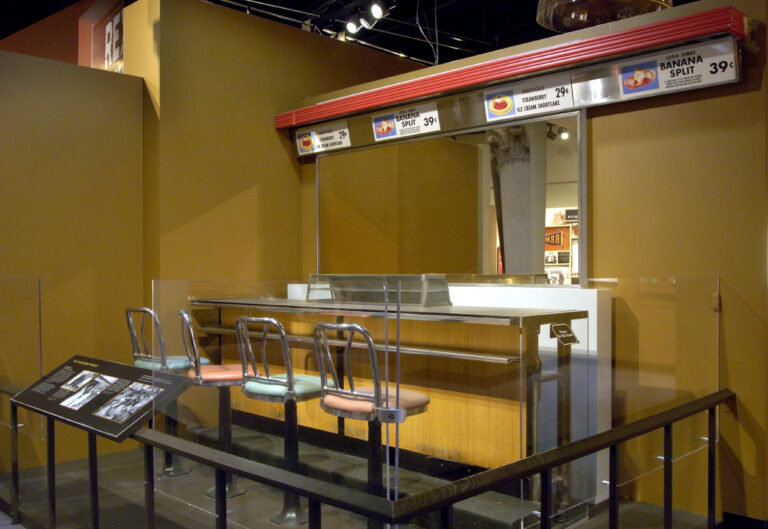
The lunch counters disappeared. The familiar red signs came down. The five-and-dime that once occupied Main Streets and downtown shopping districts across the country became something remembered rather than visited.
In 1997, the last traditional Woolworth stores in the United States closed.
It seemed like the end of the story.
But it wasn’t.
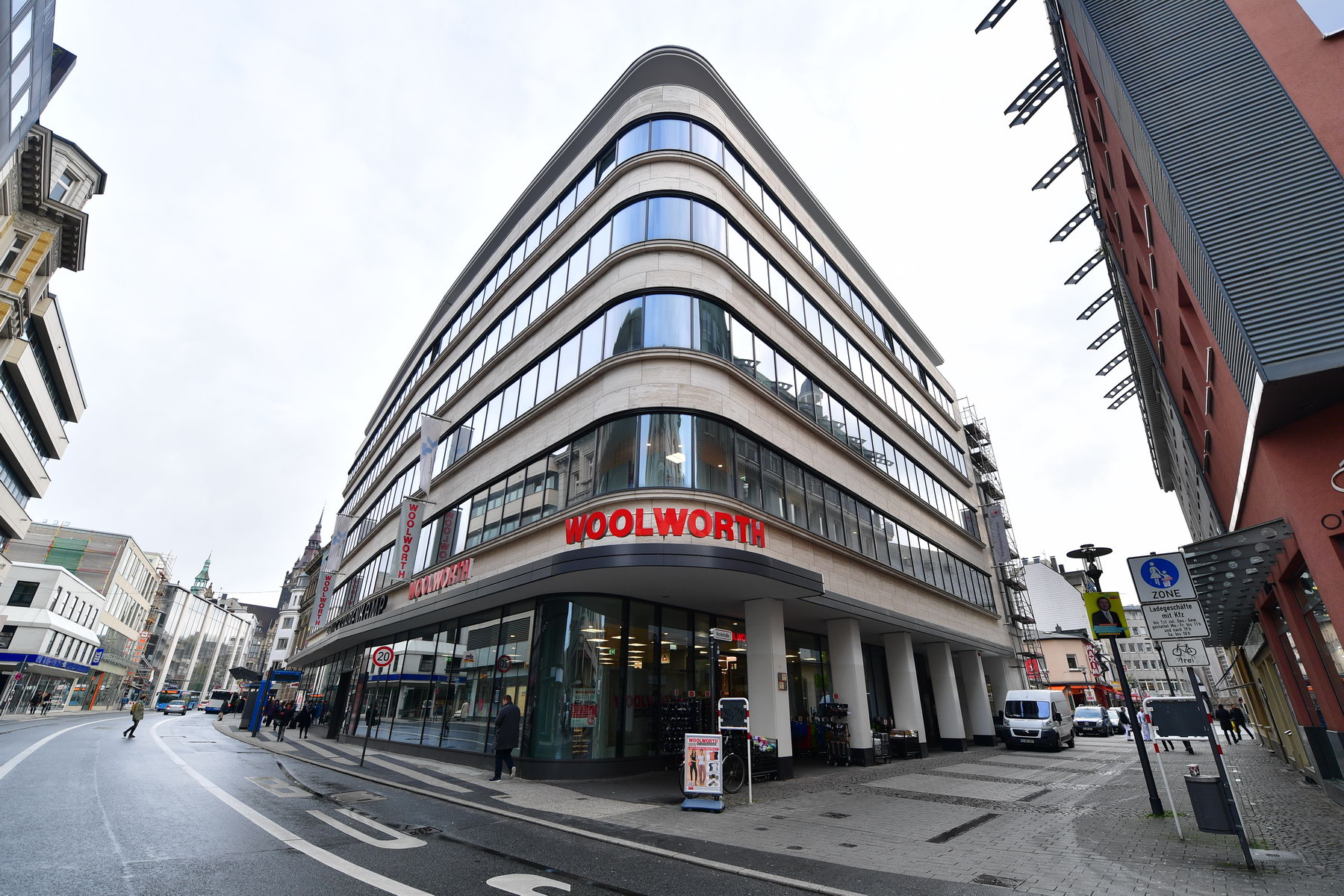
Travel through Germany today and you can still walk beneath a bright red WOOLWORTH sign and enter a store selling clothing, household goods, toys, seasonal merchandise, and everyday necessities.
And these are not simply a few nostalgic stores hanging on to an old name.
In March 2026, Woolworth opened its 1,000th European store, in Essen, Germany. The company now operates across Germany, Austria, Poland, the Czech Republic, and Slovakia—and it plans to keep growing.
So what exactly is this Woolworth?
Is it an unrelated company using a famous American name?
Not at all.
The Woolworth operating in Europe today traces its history directly back to Frank W. Woolworth’s original American retail empire.
The ownership changed along the way, but the historical connection is real.
From the Five-and-Dime to the Woolworth Building
The story begins with Frank Winfield Woolworth.
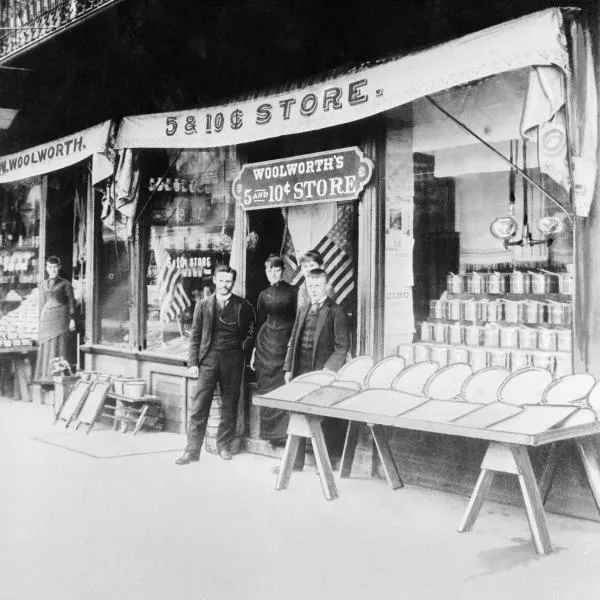
In 1879, Woolworth began experimenting with a retail idea that helped transform American shopping: inexpensive merchandise displayed openly and sold at fixed prices.
The concept took off.
By the early twentieth century, F.W. Woolworth had become one of the largest and most recognizable retail companies in the world.
Its success eventually produced one of the most extraordinary corporate headquarters ever built.
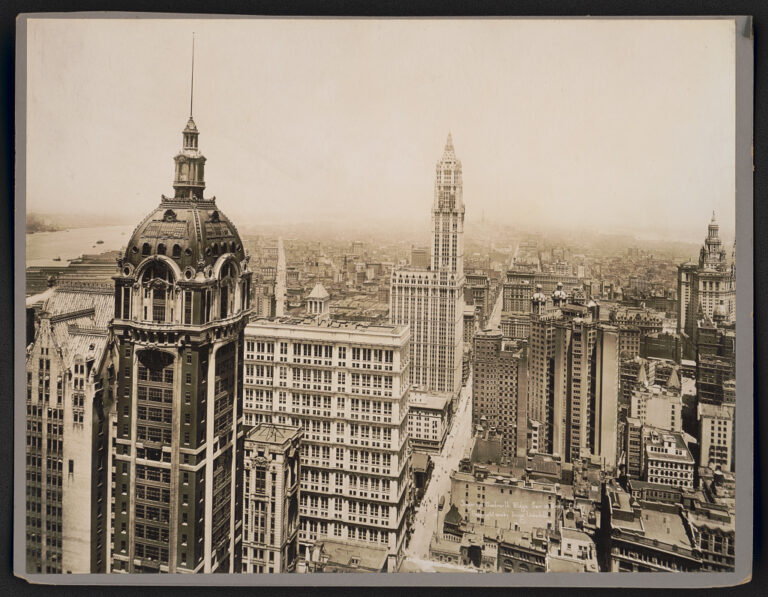
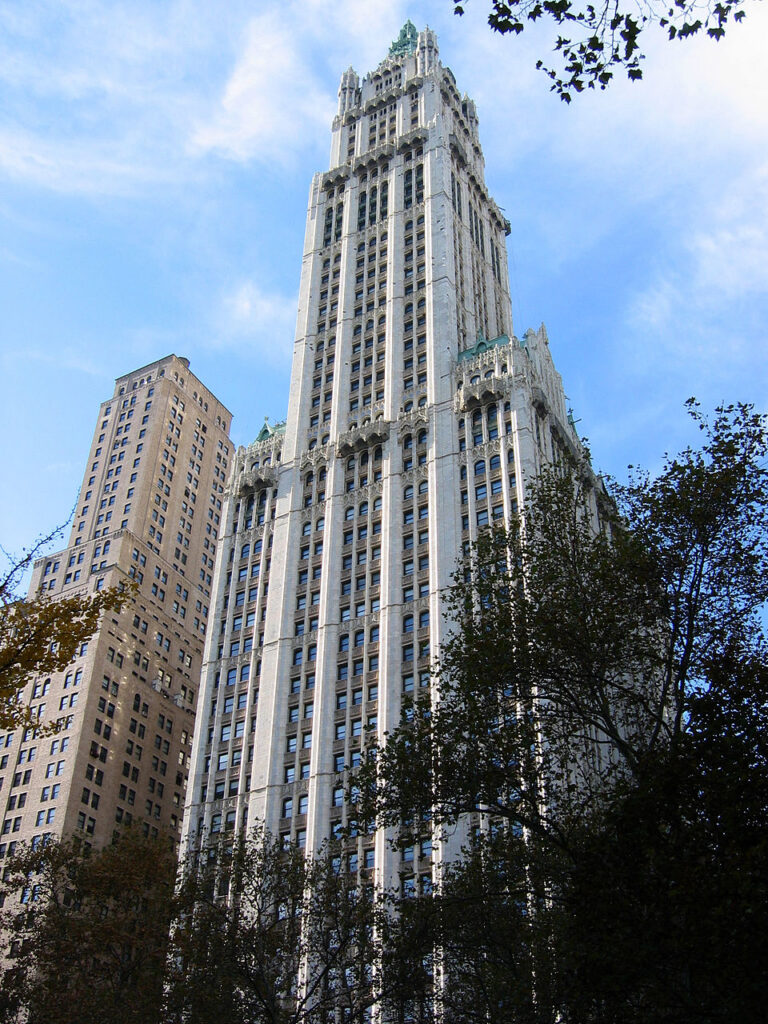
In 1913, the Woolworth Building opened at 233 Broadway.
At 792 feet, it was the tallest building in the world. It served as the headquarters of Woolworth’s growing retail organization, an investment property, and an enormous advertisement for the man whose stores had made it possible.
The name above thousands of store entrances now towered over the New York skyline.
But Woolworth’s ambitions were never limited to the United States.
The company had already expanded into Britain.
Germany was next.
Woolworth Comes to Germany
In 1926, the American F.W. Woolworth Company established a German subsidiary.
The following year, on July 30, 1927, Germany’s first Woolworth store opened in Bremen.
This is the important part:
The German Woolworth was not an imitation.
It was not another company borrowing a successful American name.
It was F.W. Woolworth.
Early German stores adapted Woolworth’s famous five-and-dime concept to the local market, offering merchandise at fixed price points—including goods selling for 25 and 50 pfennigs.
A surviving newspaper advertisement announcing the first Bremen store prominently displays the name:
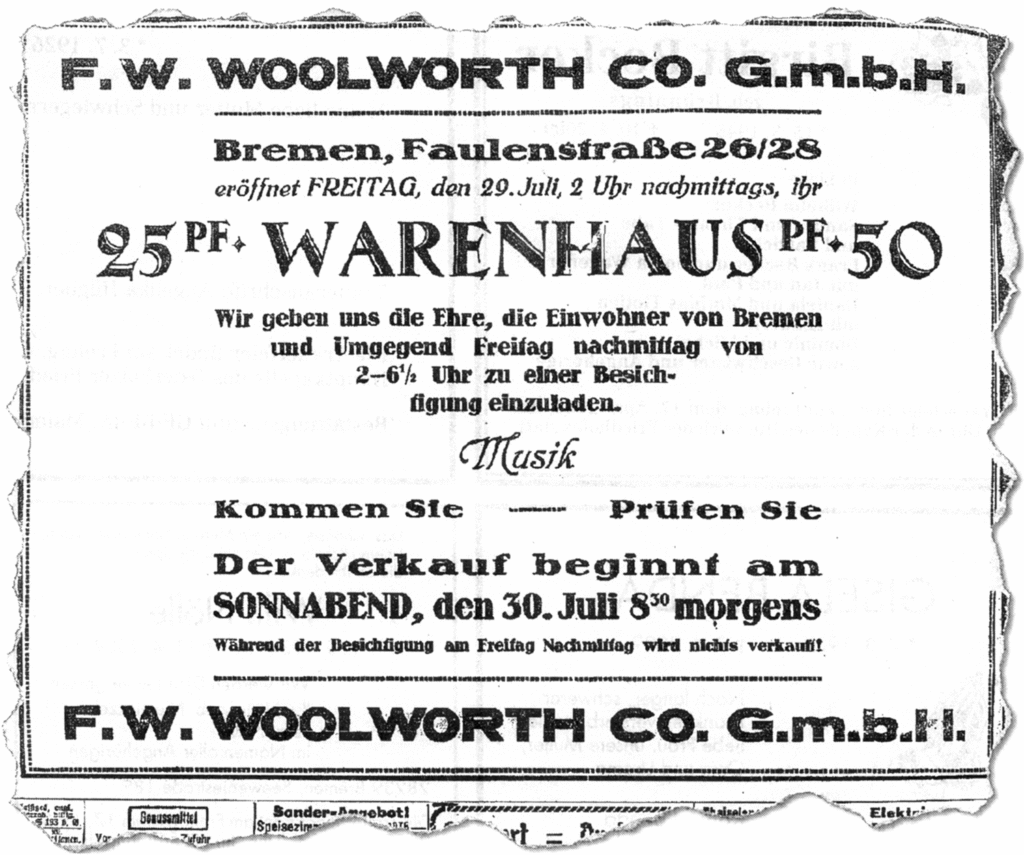
F. W. Woolworth Co.
The company expanded rapidly, survived the upheaval of World War II, rebuilt afterward, and became a familiar part of German retail life.
For generations of German shoppers, Woolworth became much what it had been in America: an everyday store where ordinary families could buy useful things at affordable prices.
Then something unusual happened.
American Woolworth began disappearing.
German Woolworth did not.
When the Two Woolworths Went Separate Ways
By the late twentieth century, the traditional American five-and-dime was struggling.
Shopping habits had changed. Discount stores were larger. Retail had moved toward malls, suburban shopping centers, and big-box chains.
The American Woolworth corporation increasingly focused on athletic footwear and sporting goods.
Then came 1997.
The remaining U.S. Woolworth stores closed.
A year later, the German operation separated from its American parent through a management buyout.
From that point forward, German Woolworth was independently owned.
The family tree had split.
And that created one of the strangest chapters in Woolworth history.
The European company that still looked like Woolworth, operated Woolworth stores, and carried the Woolworth name was no longer owned by the American corporation.
Meanwhile, the American corporate descendant gradually moved farther away from Woolworth retail.
In 1998, Woolworth Corporation changed its name to Venator Group.
In 2001, Venator became Foot Locker, Inc.
And the corporate story continued. In September 2025, DICK’S Sporting Goods acquired Foot Locker, bringing the corporate descendant of F.W. Woolworth into yet another generation of American retail. Foot Locker continues to operate as a brand under DICK’S ownership.
The American corporation survived.
The Woolworth stores did not.
Woolworth Nearly Disappeared Again
The European story was not always easy.
In 2009, Deutsche Woolworth entered insolvency.
Once again, it looked as though the Woolworth name might finally disappear from retail.
But once again:
It didn’t.
Investors acquired the remaining operation in 2010 and established the present Woolworth GmbH, beginning with roughly 158 stores.
Then something remarkable happened.
Woolworth started growing again.
The company reached approximately 300 stores in 2016.
Then 400.
Then 500.
Expansion eventually moved beyond Germany.
Stores opened in Poland and Austria in 2023, followed by the Czech Republic and Slovakia.
And in March 2026, Woolworth reached an extraordinary milestone:
1,000 stores in Europe.
Nearly a century after the first German Woolworth opened in Bremen, the company is planning hundreds of additional locations and has stated a long-term goal of reaching as many as 5,000 stores across Europe.
For a brand many Americans think disappeared almost thirty years ago, that is quite a comeback.
So Is This Really the Original Woolworth?
Yes—and no.
The distinction is important.
The modern European Woolworth is historically descended from the German subsidiary created by the original American F.W. Woolworth Company in 1926.
So this is not merely an unrelated company that later purchased the name.
But it is also no longer owned by the original American Woolworth corporation. That ownership connection ended with the 1998 management buyout, and the present company emerged following the 2009 insolvency and 2010 restructuring.
The history, however, remains very much part of the company’s identity.
Woolworth’s own official corporate timeline does not begin in 2010.
It does not begin in 1998.
It does not even begin with the first German store in 1927.
It begins with Frank Woolworth in 1879.
The timeline includes the opening of the Woolworth Building in New York in 1913, the creation of the German company, and the development of the modern European retailer.
In other words, today’s Woolworth considers that earlier story part of its own.
And historically, it is.
One Woolworth Legacy in Europe. Another in New York.
Perhaps the most interesting part of the story is what survived on each side of the Atlantic.
In America, the stores disappeared.
But the building survived.
At 233 Broadway, the Woolworth Building still rises over City Hall Park more than a century after Frank Woolworth opened it as the headquarters and architectural symbol of his retail empire.
Across the Atlantic, something different survived.
The corporate ownership changed.
The company reorganized.
But the stores—and the name—remained.
One part of the Woolworth legacy became architecture.
The other remained retail.
Today, visitors on Woolworth Tours NYC’s officially authorized Woolworth Building Tour can walk through the building from which this enormous international business was once directed.
Inside are the marble, mosaics, vaulted ceilings, sculpture, and extraordinary details created when Woolworth was one of the most powerful names in retail.
At the same time, across the Atlantic, shoppers are still walking through the doors of stores bearing that same Woolworth name.
Nearly a century separates today’s European stores from that first German location in Bremen.
More than a century separates them from Frank Woolworth’s five-and-dime beginnings.
Yet the name is still there.
The stores are still opening.
And the story Frank Woolworth began in 1879?
It never really ended.
Sources and Further Reading
- Woolworth GmbH — Company History: Official company timeline connecting the modern European retailer to Frank W. Woolworth, the Woolworth Building, the 1926 German subsidiary, the first Bremen store, and later corporate developments.
https://www.woolworth.eu/history - Woolworth GmbH — 1,000th European Store: Announcement of the March 2026 Essen opening and Woolworth’s continuing European expansion.
https://www.presseportal.de/pm/53642/6229525 - Library of Congress — F.W. Woolworth and the Five and Dime: History of Frank Woolworth, the American company, international expansion, and the closing of the U.S. stores.
https://guides.loc.gov/this-month-in-business-history/february/woolsworth - The Skyscraper Museum — Woolworth Building: History of the building as F.W. Woolworth’s corporate headquarters and architectural advertisement.
https://old.skyscraper.org/EXHIBITIONS/WOOLWORTH/realestate.php - 1927 Bremen Woolworth Opening Advertisement: Historic advertisement documenting Germany’s first Woolworth store.
https://commons.wikimedia.org/wiki/File:Anzeige_Woolworth_1927-7-28.png