
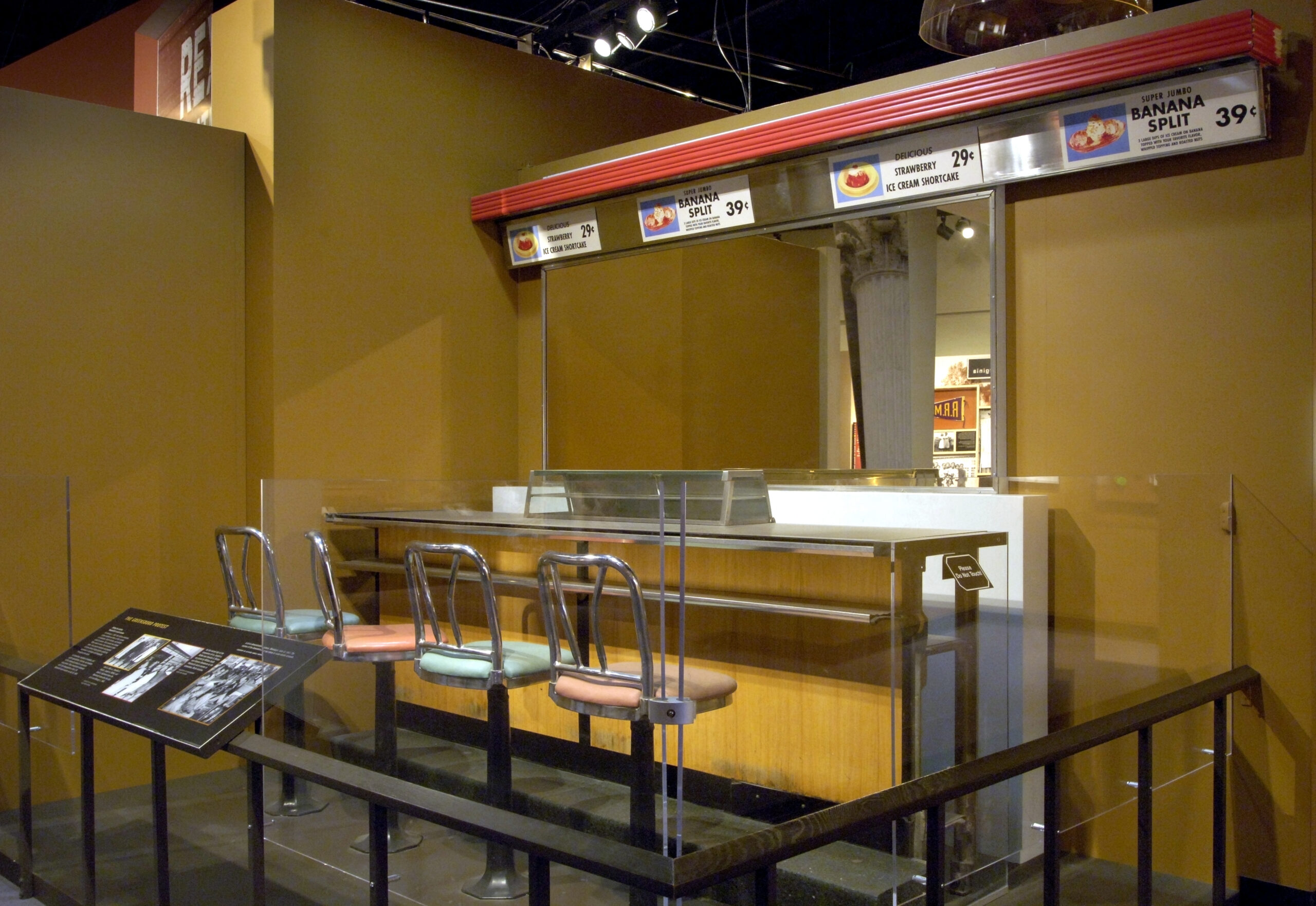
The Woolworth Lunch Counter: An American Icon—and a Battleground for Equality
What comes to mind when we picture a Woolworth lunch counter?
Perhaps it is a long row of swivel stools. A cup of coffee. A hamburger, sandwich, or slice of pie served at an affordable price. A place to rest after shopping at the local five-and-dime. For generations of Americans, the Woolworth lunch counter was a familiar and ordinary part of everyday life.
But ordinary places can hold extraordinary stories.
The Woolworth lunch counter was not only a place where people ate. It was also a place where the divisions within American society became painfully visible—and where a small group of young people helped change the course of history.
A Familiar Part of American Life
F.W. Woolworth stores were once found in cities and towns throughout the United States. Customers could purchase clothing, household goods, toys, candy, school supplies, and countless other inexpensive items. The stores offered ordinary Americans access to products they could afford, helping to transform the way Americans shopped.
Food service eventually became another important part of the Woolworth experience.
By the early twentieth century, Woolworth was experimenting with refreshment rooms, soda fountains, and other forms of food service. As the company expanded, its luncheonettes and lunch counters became a familiar feature of stores throughout the country.
They were simple. Convenient. Affordable.
Customers could sit down during a shopping trip, order an inexpensive meal, drink a cup of coffee, and talk with neighbors or friends. In many communities, the Woolworth lunch counter became a gathering place; a place connected to family memories, childhood outings, and the routines of daily life.
Yet the experience was not the same for everyone.
A Counter Divided
In many Southern Woolworth stores, Black customers were permitted to enter the building. They could browse the aisles. They could select merchandise. They could pay for the same products purchased by white customers.
But they could not sit at the same lunch counter and be served.
The contradiction was obvious. Their money was accepted in one part of the store, while their dignity was denied in another.
Segregation was not merely a system of separate buildings, schools, waiting rooms, and entrances. It reached into the most routine parts of life. Where a person could sit. Which restroom a person could use. Where a person could eat. Whether a person would be treated as a customer—or as someone considered unworthy of basic service.
The lunch counter may have appeared ordinary, but it represented something much larger. It became a physical boundary between those who were welcomed and those who were told they did not belong.
What does a person do when an unjust rule has been accepted for so long that many people no longer question it? What does it take to challenge a system supported by custom, business practices, and law?
Sometimes it begins with four students taking four seats.
Four Students Sit Down
On February 1, 1960, four freshmen from North Carolina A&T State University entered the Woolworth store in Greensboro, North Carolina.
Their names were Ezell Blair Jr., now known as Jibreel Khazan; Franklin McCain; Joseph McNeil; and David Richmond.
They purchased items from the store and then sat down at the lunch counter. They requested service.
They were refused.
They did not shout. They did not threaten anyone. They did not destroy property.
They remained seated.
This simple act required extraordinary courage. The students understood that they could face humiliation, arrest, harassment, or violence. They also understood that quietly accepting the rule would allow the injustice to continue.
So they stayed.
The following day, more students joined them. The protest continued to grow, and news of the demonstration spread. Soon, students in other cities began organizing sit-ins of their own.
One counter became many counters. Four students became hundreds, and then thousands.
The sit-in movement spread throughout the South, becoming one of the defining forms of nonviolent protest during the Civil Rights Movement. Young people sat peacefully while being insulted, threatened, shoved, and sometimes attacked. They endured the hatred of people determined to preserve segregation.
Still, they remained.
Their strength was found not in violence, but in discipline. Not in retaliation, but in their refusal to move. They forced businesses, communities, and the country itself to confront a question that could no longer be ignored: How could America speak of liberty and equality while denying Black citizens the right to sit at a lunch counter?
The Counter Changes
The Greensboro protests continued for nearly six months. Demonstrators maintained pressure on the store, while boycotts created economic consequences for businesses that continued to support segregation.
On July 25, 1960, the Greensboro Woolworth lunch counter was finally desegregated.
The policy changed.
But the importance of the protest extended far beyond a single store. The students demonstrated that ordinary people could challenge powerful institutions through organized, persistent, nonviolent action.
They were young. They did not hold political office. They did not control large companies or command great wealth.
They sat down.
And by sitting down, they stood for something much greater than themselves.
A section of the original Greensboro counter is now preserved at the Smithsonian’s National Museum of American History. The former Woolworth store in Greensboro is now home to the International Civil Rights Center & Museum.
The counter remains because the story matters. It reminds us that history does not only take place in government buildings, courtrooms, or on battlefields. History also takes place in stores. At tables. On sidewalks. In the ordinary spaces where people decide whether they will accept injustice—or resist it.
The Story Behind the Woolworth Building
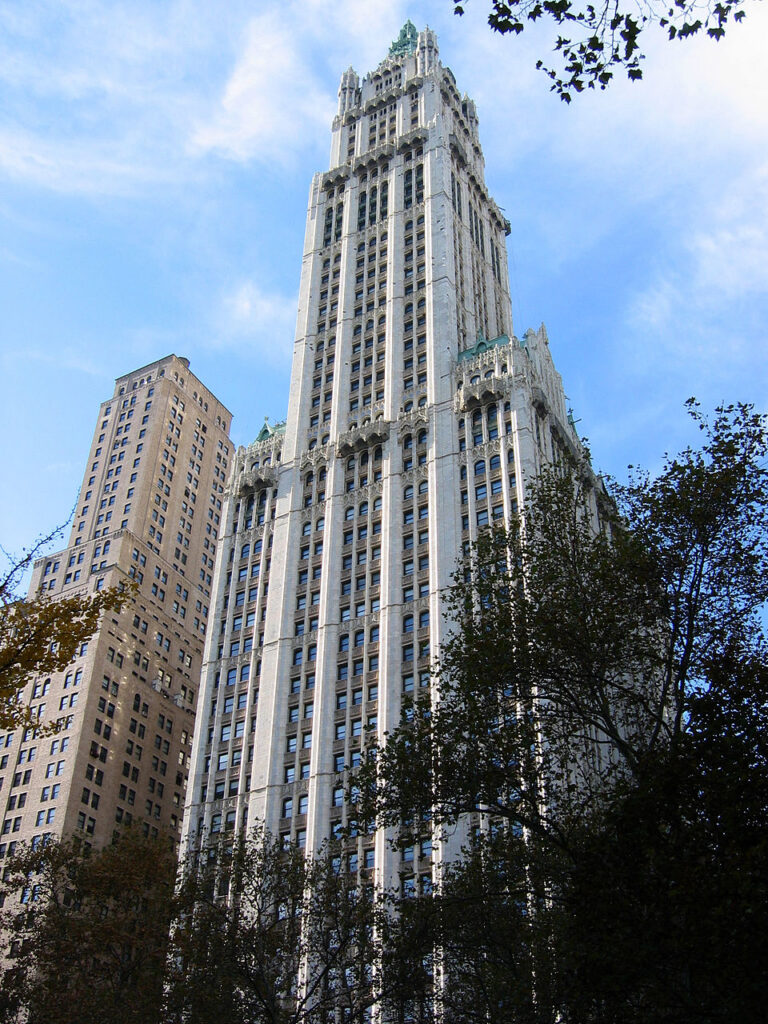
The story of Woolworth’s retail empire also leads back to Lower Manhattan and the Woolworth Building at 233 Broadway. The building rises across from City Hall Park, in an area shaped by centuries of political power, commerce, journalism, protest, and architectural change.
Completed in 1913, the Woolworth Building served as the headquarters and architectural symbol of the F.W. Woolworth Company. Its height, design, and extraordinary detail reflected the success of one of the largest retail businesses in the world.
The building represented ambition. Innovation. Wealth. Power.
It became one of New York City’s most recognizable landmarks; a monument to the remarkable growth of a company that had changed American retail.
But history is rarely simple.
The same company that made affordable goods and meals available to millions also operated stores that reflected and enforced the racial segregation of their time. Its history contains achievement and contradiction, beauty and injustice, progress and resistance.
Should we admire the building without examining the empire behind it? Should we celebrate innovation while ignoring those who were excluded from its benefits?
To understand history fully, we must be willing to look at all of it.
More Than an Architectural Landmark
The Woolworth Building is often admired for its stunning architecture, ornate lobby, terra-cotta exterior, and place in the development of the New York City skyline. It deserves that admiration.
But a building is more than stone, steel, glass, and decoration.
It represents the people who imagined it, financed it, built it, worked inside it, and were affected by the business it represented. It carries the ambitions of its founders and the experiences of the countless people whose lives intersected with the Woolworth name.
Some of those experiences were joyful. Some were ordinary. Some were painful. Some changed America.
On the Woolworth Building Tour, we explore more than the beauty of this extraordinary landmark. We examine the people, ambitions, innovations, controversies, and historical events connected to the retail empire behind it.
The Woolworth story is not simply the story of a successful businessman or a famous skyscraper. It is also the story of American consumer culture, architectural ambition, social division, protest, and change.
It is the story of a lunch counter where some people were welcomed and others were refused.
It is the story of four young men who sat down and would not leave.
It is the story of an ordinary place that became a battleground for equality.
And it is a reminder that progress does not happen merely because time passes. It happens because people recognize injustice, refuse to accept it, and find the courage to act.
Discover the fuller story behind one of New York City’s most recognizable buildings on the Woolworth Building Tour with Woolworth Tours NYC.